








News
Published on
Baby Broccoli from Mexico: Buyer's Guide to Specs, Seasonality and Storage
Specs, year-round seasonality, storage temps and food safety: what produce buyers should know before sourcing baby broccoli from Mexico.

Juan Mercado
Director of Supply Chain & Founder

15 min read

Share
Baby broccoli from Mexico is available 12 months a year. A good program depends on three things: consistent stem length and bunch weight, a cold chain held at 32–34°F, and a supplier who commits to volume in writing. This guide covers what to specify, when supply is strongest, and how to keep baby broccoli fresh from the border to the shelf.
Retailers and restaurants keep adding baby broccoli because it cooks fast, wastes almost nothing and looks premium on the plate. For buyers, the challenge is not demand. It is getting the same product, week after week, without gaps.
What is baby broccoli?
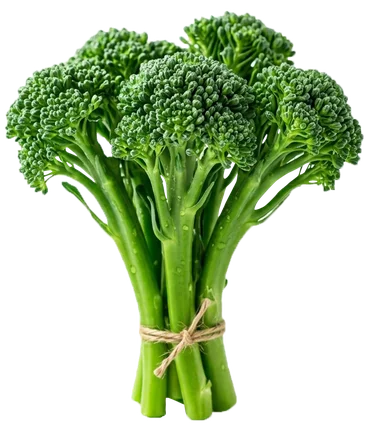
Baby broccoli is a cross between broccoli and gai lan (Chinese kale). Both parents are the same species, so it is a traditional hybrid, not a genetically modified crop. It has long, slender stems, small florets and a few tender leaves, and the whole stalk is edible. The flavor is milder and sweeter than regular broccoli.
You will see several names for it:
Baby broccoli: the general market name.
Broccolini®: a registered trademark of Mann Packing for its own brand of baby broccoli. Other suppliers' product should be sold as baby broccoli.
Tenderstem, Bimi, Aspabroc: brand or regional names used in Europe and elsewhere.
Baby broccoli is not the same as broccoli rabe (rapini), which is a bitter leafy green from a different species (closer to turnips), or broccoli crowns harvested early. When you write a spec or a menu, use the name that matches what you are actually buying.
Specs to put in your baby broccoli program
A clear spec sheet prevents most disputes at the dock. These are the points buyers should agree on with a supplier before the first load:
Spec | What to ask for | Why it matters |
|---|---|---|
Stem length | A target length with a tolerance of 15 to 30 cm (6 to 12 inches) | Consistent bunches look better on shelf and cook evenly |
Bunch weight / count | 150 to 250 grams (about 5 to 8 ounces) and contains 8 to 12 stems per bunch. | Lets retail price by the bunch and kitchens cost each plate |
Floret condition | Tight, dark green florets; no yellowing or open flowers | Yellowing is the first sign of age or heat stress |
Stem condition | Firm, crisp, freshly cut ends; no hollow or woody stems | Tough stems mean a late harvest |
Pack style | Bunched with band or tie, loose bulk, or tray-pack | Retail and foodservice need different packs |
Case and pallet | Case weight, cases per pallet, pallets per load | Needed to plan freight and storage space |
Pulp temperature at shipping | 32–34°F | Proves the cold chain started right |
Labels and traceability | Lot code and PTI-style case label | Speeds up traceback and recalls |
Ask for a written spec sheet and photos of the standard pack. At Plein Produce we work with our farms on harvest timing, stem length and bunch size, so what you order is what arrives. [Link: Download the baby broccoli spec sheet]
Seasonality: why Mexico means year-round supply
Baby broccoli is a cool-season crop. It grows best in mild temperatures, and heat makes it bolt (flower early) and turn bitter. That is why a single growing region rarely covers the whole year.
Mexico solves much of this. Its farming regions sit at very different altitudes and latitudes, so growers can plant in highlands during hot months and in lower valleys during winter. [Plein: name the growing states, e.g. Guanajuato, Baja California, if you want to share them.]
What this means for buyers:
Plan plantings, not just orders. Baby broccoli is planted months before harvest. The most reliable programs schedule weekly volume with the supplier before the seed goes in.
Watch the transition weeks. Supply can tighten when production moves from one region to another, or after heavy rain or heat. Ask your supplier how they cover those weeks.
Expect early warnings. A good supplier tells you about a gap weeks ahead, not the day of shipping.
At Plein Produce, we plan plantings with our growers months ahead, so your volume is scheduled before the seed is. If a gap is coming, you hear it from us first.
Storage and handling: from dock to shelf
Baby broccoli is harvested ready to eat. It does not ripen after harvest, so every hour above the right temperature shortens its shelf life.
Condition | Target |
|---|---|
Temperature | 32–34°F (0–1°C) |
Relative humidity | 95–100% |
Ripening needed | None. Keep it cold. |
Ethylene | Sensitive. Store away from bananas, avocados, tomatoes and other ripening fruit. |
Handling tips:
Check pulp temperature on arrival. Probe a few cases before signing for the load.
Move it to cold storage fast. Loading docks are where most cold chains break. Climate-controlled docks keep product cold while trucks are loaded and unloaded.
Keep it away from ripening fruit. Ethylene causes florets to yellow. Don't mix it with bananas or tomatoes in the same room or trailer.
Keep it humid, not wet. High humidity prevents wilting; standing water in packaging causes decay.
At retail, use the refrigerated case. Light misting helps; bunches left on a dry, warm display wilt quickly.
The signs of age are easy to spot: yellowing florets, limp stems and dry or browned cut ends. If you see them at receiving, flag the lot right away.
Food safety and the border crossing
Most Mexican baby broccoli enters the US through South Texas. The Pharr–Reynosa International Bridge handles more than 65% of US fresh produce imports from Mexico, which makes it the main gateway for this crop.
Before you approve a supplier, ask for:
Food safety certification. Look for a third-party audited food safety program and Mexico's SENASICA certification for the farms and packing houses.
Traceability records. Every case should carry a lot code you can trace back to the field and harvest date. Many large retailers already require this for all produce, ahead of the FDA's Food Traceability Rule, whose compliance date is now July 20, 2028.
A cold-chain plan for the crossing. Ask where product is held after it crosses and how temperature is monitored.
Plein Produce plans full loads for a smooth crossing at Pharr, Texas, and holds product in temperature-controlled storage with 24/7 monitoring before delivery across North America. [Plein: name your certifications here, e.g. PrimusGFS or GlobalG.A.P., if applicable.]
Frequently asked questions
Is baby broccoli the same as Broccolini? Broccolini® is one brand of baby broccoli, trademarked by Mann Packing. Baby broccoli from other growers is the same type of broccoli–gai lan cross, sold under the general name.
Is baby broccoli available year-round? Yes. Growing regions across Mexico at different altitudes allow 12-month supply when plantings are planned ahead with the grower.
What temperature should baby broccoli be stored at? 32–34°F (0–1°C) with 95–100% relative humidity, away from ethylene-producing fruit.
Does baby broccoli need to ripen? No. It is harvested ready to eat and should be kept cold from field to shelf.
How is baby broccoli usually packed? It is usually sold in banded bunches for retail or loose for foodservice. Confirm case weight and pallet configuration with your supplier. [Plein: add your standard packs.]
Build your baby broccoli program with Plein Produce
Plein Produce supplies baby broccoli from Mexican farms, packed to your program, with a supply calendar we commit to in writing. Tell us your weekly volume, bunch size and delivery schedule, and we will build a plan around it.
Request a quote · See baby broccoli specs · Tour our facilities
Sources: Plein Produce baby broccoli page; Wikipedia: Broccolini; Produce Blue Book: Mann Packing trademark campaign; City of Pharr: produce season; FDA: Food Traceability Rule
Continue Reading
View All Articles

No items